Parc Guell

Park Guell

Visiting Park Güell

Tourists flock to this living, breathing city-monument to see structures designed by the architect Antoni Gaudí. Architecture built by this man has a very distinct look – and feel – to it, one that captures the eyes and hearts of visitors when they gaze upon the late artist’s work.

One of these such works is Park Güell, one of the more popular of the Gaudí attractions sprinkled throughout Barcelona. This article is a handy guide to visiting the park, including all you need to know to sound intelligent when you act as tour-guide for your friends and family.


About the artist

Antoni Gaudí was born and raised in Catalonia. He was actually born in the city of Reus in 1852, suffering from Rheumatism as a child. Young Gaudí spent a lot of time interacting with animals and nature, which certainly inspired his later art (Casa Batlló, for instance, seems to resemble a shimmering fish). His admiration for nature shone through for the duration of his life, demonstrated in his vegetarian lifestyle as much as his art.


He first arrived in Barcelona in the year 1868, becoming an architecture student. His professors, as is often the case with prodigies, either thought his work was downright awful or placed him on a pedestal as a genius. After his graduation, the city of Barcelona seemingly took a gamble when they commissioned Gaudí to design the lampposts in the Plaça Reial. If you visit the plaza, remember to look up and take in the very Gaudí-style heads on the lampposts, adorned with swirls and spikes and subtle hints at the natural world.


Gaudí went on to become a very famed artist in Barcelona, and is even considered the father of the Modernism art movement.


The history of Park Güell

Gaudí’s passion for nature rears its head most obviously in Park Güell, where architecture and the man-made blends almost imperceptibly with the natural world around it.


In 1900, Count Eusebi Güell purchased the expanse of land on a hillside decorated with trees and hired the then-popular artist to design a miniature city of houses specifically for the wealthy. Somewhat fortunately, the project was not a success story, and in 1914, the idea was abandoned. However, this was not before Gaudí had already begun his landscaping project, creating 3km of roads and walks, steps, a plaza and two gatehouses. The city bought the estate in 1922, and thus it became a public park.


Things to see

Just inside the entrance are the two gatehouses, displaying the typical Gaudí style of wavy terraces and subtle accents. The Centre d’Interpretac used to be a porter’s home, but now it holds a display on Gaudí’s building methods and the history of Park Güell. Make sure to check out the top floor for a stunning look-out point.


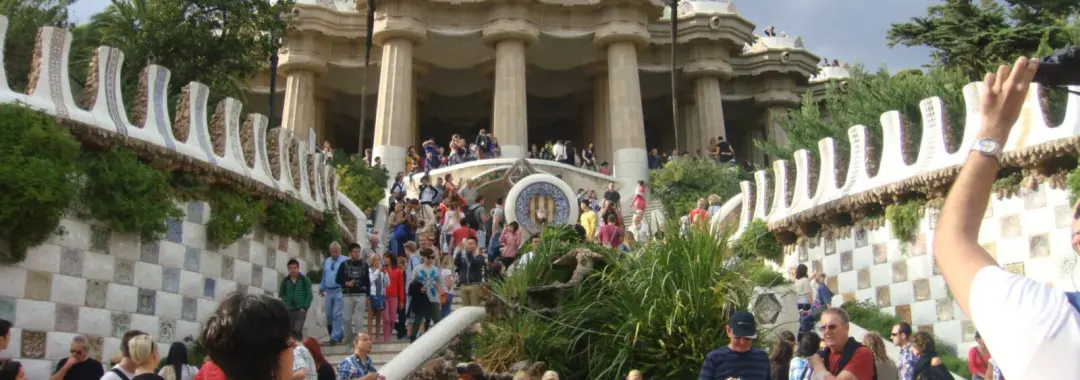
The steps stretching up from the entrance are guarded by a mosaic reptile, boasting vibrant hues of blue, green, orange and yellow. This is quite a symbol of the park and even the city, and a great photo op for tourists.


Above this is the Sala Hipóstila, a forest of 86 columns made of stone. Although man-made, the columns really appear like trees, bending and leaning and carved ornately like bark. Gaudí certainly paid attention to detail.


Atop this is the Banc de Trencadís, a tiles bench which winds around a terrace overlooking the park below. This was actually designed by Josep Maria Jujol, a close friend of Gaudí, but in very typical style, it is never as simple as it seems. The ‘bench’ acts as a catchment for rainwater that runs down the hillside; the water filters through stone and sane and drains through the tree-like columns to an underground cistern.


The Park is also home to the Casa-Museu Gaudí, where the architect lived out his last 20 years. The structure still contains furniture of his own design, including items brought in from other locations. It was built as a prototype for the other houses that were originally intended to be built in the park.


Now, the Park is a UNESCO-listed property, making it a very rewarding visit for tourists who come to Barcelona.


Visiting the park

Park Güell is located just to the north of Gràcia, which actually used to be a city separate from Barcelona until the 1890s. You can take the Metro to Lesseps and then walk to the park, but this requires a lot of uphill walking (followed by a long walk around the expanse that is Park Güell) and is not necessarily the fastest route. Alternatively, take Bus 24 or 32, which drops off visitors right by the gates.


It is estimated that around four million people visit the Park per year. Authorities limit access to a certain number of people per half-hour, meaning that sometimes, it can be difficult to get in. If you are planning your Barcelona trip during peak tourist season (i.e. summer), it can be advised to book ahead and perhaps visit the Park early in the morning. Booking ahead also saves you a euro on the admission fee.

The park is open from 8am-9:30pm from May-August but closes earlier at other times (closing at 8:30pm in April, September and October, and at 6:30pm from November through to March). The admission fee is €8, or €5.60 for children, but admission into the Casa-Museu Gaudí will put you out another €5.50 (definitely worth it if you’re interested in all things Gaudí!).


Final tips

It can get hot when walking around the Park, so make sure you bring sunscreen and a hat, or perhaps even sunglasses. Considering the fact that the Park is on a hill, make sure you wear appropriate footwear to navigate the terrain, and prepare to do some walking.


There are some restaurants or cafes in the Park, but these can be expensive. Perhaps take along a packed lunch and a bottle of water and indulge in a lovely picnic on the curvaceous bench on the terrace.


Finally, there are plenty of wonderful sights to see in Park Güell, so don’t forget your camera!
Montjuic

Montjuic

Visit Montjuïc


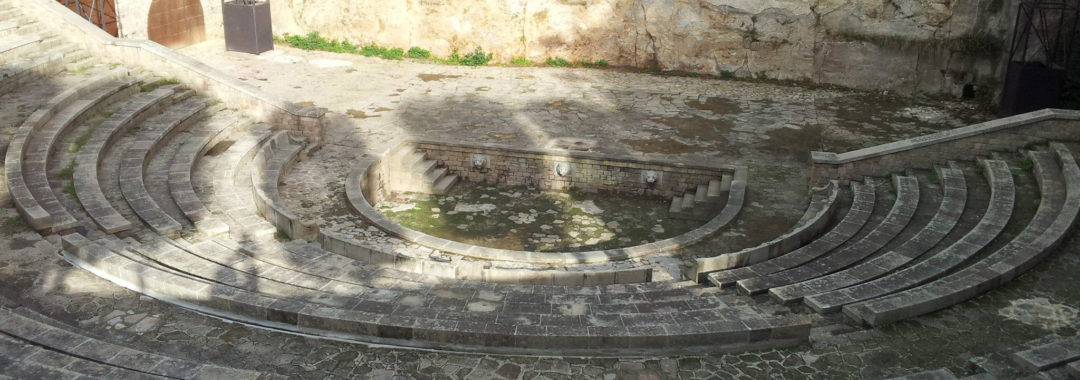
Situated not too far from Barcelona city center is Montjuïc, a hill standing at 173m above sea level. The towering landscape lies right beside the sea, offering brilliant views of the coast as well as providing a great day out for visitors and locals alike.


A key site for Barcelona tourism, there is much speculation about the origin of the hill’s name, but many theorise that it comes from “Mountain of the Jews,” referring to the medieval Jewish cemetery that was found on the hillside. Others think it derives from “Monte Jovis” due to the possible existence of a Roman temple at this site that was dedicated to the God Jupiter.


Whatever your beliefs about the name, Montjuïc has a lot to offer for tourists. It is often known as Parc de Montjuïc (Montjuïc Park) thanks to its leafy trees and fresh, alpine air. But, aside from the beauty of the place, there are lots of things to do. Check out the best tourist spots below to make the most out of your visit.


CaixaForum

Contemporary art lovers will thoroughly enjoy the CaixaForum and its marvellous collection. Even the architecture of the building is stunning, with the artworks housed in a renovated factory that even served as the HQ for the First Squadron of the police cavalry unit for much of the 20th Century.


Entry to the museum is €4 (free for children) but be aware that the 1st Sunday of each month is free! And, during the warmer months, the CaixaForum sometimes hosts musical events, so be sure to check out their webpage for more information.


MNAC

Museu Nacional d’Art de Catalunya (or MNAC), is another one for the connoisseurs of art. At the more expensive price of €12, MNAC was constructed for the World Exhibition in 1929, and houses a timeline of Catalan art spanning from the Middle Ages to the early 20th Century.


The Romanesque Frescoes draw the most attention, including Christ in Majesty (dated around 1123) and Virgin Mary and Christ Child. Amongst the medieval works are items of Modernista furniture and decorations, including a mural by Roman Casas that once decorated the bar and restaurant Els Quatre Gats (Picasso’s favorite hangout).


If you’re here for Barcelona sightseeing, then why not see it all from the top? Skip the art and go straight to the rooftop viewpoint; the admission price is €2 for a stunning photo op.


Museu Etnològic

If you are interested in Catalonian history, this museum is for you. The ethnology museum has a permanent collection displaying exhibits on myths, religious festivals, folklore, and other treasures from Barcelona’s past.


Don’t miss the massive gegants (figures made of papier-mâché) of King Jaume I and Queen Violant. There is also a dragon and devil costumes that are used in the correfocs (fire runs), which you can see in Catalonian festivals.


As with the two museums above, the first Sunday of the month is free for visitors (in this case only between 4-8pm), but the usual price is €5.


Jardí Botànic

Montjuïc has its fair share of parks and green spaces to lounge and get some breathing room away from Barcelona’s architecture, and one of the most

beautiful places to do this is the Jardí Botànic. The garden is dedicated to Mediterranean flora and contains some 1500 species. It costs €3.50 to enter the gardens, but is free after 3pm on the first Sunday of the month.


Plaça d’Espanya

This roundabout is one of Barcelona’s most important squares. It was built for the International Exhibition. It can be distinguished by the Venetian Towers, named for their resemblance to the belltower in Venice’s St Mark’s Square. Another key feature of the square is the Arenas de Barcelona, which was formerly a bullring. It was constructed in Moorish style, but has since been converted into a shopping center.


The Arenas has a viewpoint that is great for looking out over Barcelona. The escalators inside the mall are free to use, but the outside lift has a price of €1.


Montjuïc Castle

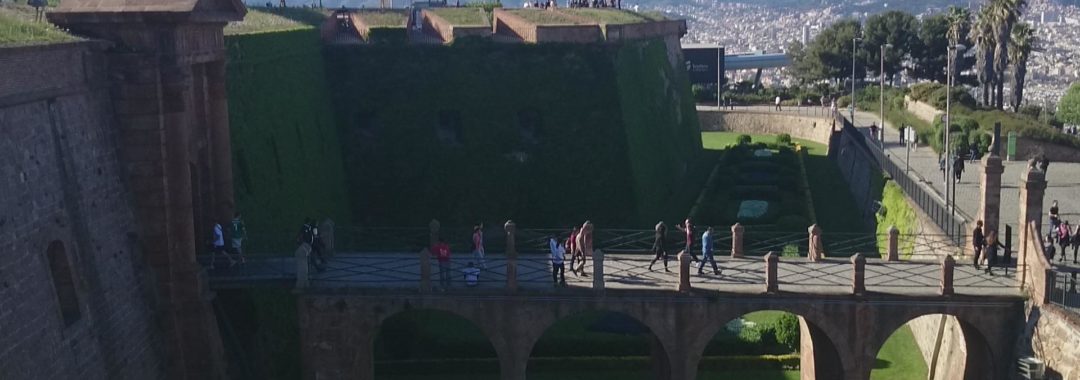
Sitting at the highest point of the mountain lies Montjuïc Castle, offering breathtaking views of both the coastline and the city. The castle is steeped in history, such as its role in the Spanish Civil War and its period as a prison. Now, the castle has some temporary exhibitions and hosts a few cultural events. Most visitors, however, visit the castle for its view.


You will need to pay to enter the castle, which will set you back €5. Try visiting the viewpoint just before sunset to watch the sun go down over the city.


Estadio Olímpic Lluís Companys

When Barcelona has hosted Olympic games in the past, this stadium is the main location for the sporting events. It sits right at the heart of Montjuïc and was opened in 1929 but has been restored a few times since. It is now a 54,000-capacity stadium, used for sporadic events including sporting and musical.


Visitors can see a small portion of the stadium free of charge by entering under the Olympic Torch.


El Poble Espanyol

The ‘Spanish Village’ is a wonderful attraction that many visitors love to see. It incorporates architecture and design from all the regions of Spain, giving an intriguing insight into the cultural differences across the country. It takes a few hours to wander around the 117 buildings, which includes 17 restaurants, cafes and bars, and 20 craft shops as well as places to buy souvenirs.


It costs €14 to enter, or €7 for children, but splashing out €3.50 extra on a multimedia guide is well worth the price (you will need to leave a €20 deposit to ensure you return it).


Getting to Montjuïc

Now that you’re probably sold on the trip to Montjuïc thanks to all the Barcelona tourist attractions to tick off your list, how do you get there? There are a number of ways to get up the hill, including by foot if you are situated nearby. Metro Stops nearby include Espanya, Parallel and Poble Sec, which are serviced by Lines 1, 2 and 3. Many of the bus lines also run to Montjuïc. For a more fun experience, you can catch the Funicular at Parallel Metro Station and use the same metro ticket to get up the mountain. Alternatively, you can take the Aeri del Port Cable Car, running from the Sant Sebastià tower in La Barceloneta (a return ticket is €16.50).


Montjuïc is definitely one of the best things to do in Barcelona, with plenty of places to visit and things to see.

Tibidabo

THE MOUNTAIN


When some tourists grow tired of the architecture and get a little bored of museums, many opt to go to the beach or picnic in a park, but there is another way to get out of the hustle and bustle of the city center: Tibidabo.

The Serra de Collserola is a mountain range lying between the Besos and Llobregat rivers. It forms a part of the Catalan Coastal Range that snakes its way through Catalonia. Tibidabo is the tallest of the Serra de Collserola mountains, towering at 512m (1,680 ft) over the north-west of Barcelona and offering stunning views of both the cityscape and the coastline.


The name of the mountain comes from Latin Vulgate Bible verses. “Tibi dabo”, meaning “I will give to you” was said to the devil by Jesus as they looked down from a mountain upon all the kingdoms of the world. Of course, oral tradition suggests that this mountain was that same mountain in the Bible, which gives Barcelona’s mountain its name.


GETTING THERE


Tibidabo Funicular was the first funicular railway constructed in Spain, opened over a century ago in 1901. The last renovation of the railway occurred in 1958, giving the railway an quaint, antique vibe (perhaps it needs a touch-up, but it still runs just fine). The Funicular climbs 1102m up a hill with a gradient of over 25%, right to the top of Tibidabo in just a few short minutes.


The Tibidabo Funicular departs from the Plaça del Dr. Andreu (accessible via Bus 196 or the Tramvia Blau, though the tram is more expensive). You can also walk to the Plaça, which should take around half an hour.


As for prices, the Funicular is actually cheaper if you buy a combined ticket for the Theme Park at the top. It costs €4 for a combined ticket (this just being for the funicular, with the park admission fee on top), and €7.50 without buying a ticket for the Theme Park. The railway opens 15 minutes before the Camí del Cel ride opens in the Theme Park and closes 15 minutes after the ride shuts.


But once you’re up there, what is there to see and do?


BASÍLICA DEL SAGRAT COR DE JESÚS


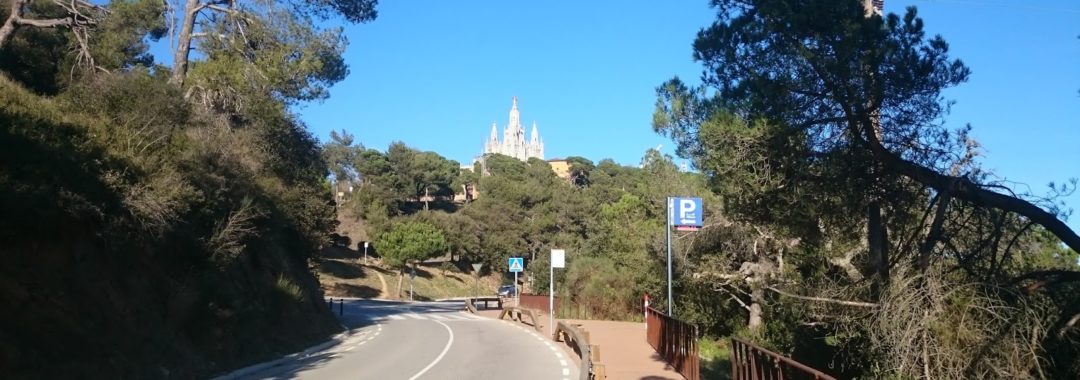
Located above the top funicular station stands an incredible basilica. As you may be able to tell from the name, this was Barcelona’s answer to the Parisian Sacré-Coeur. However, this basilica is actually two churches built right on top of each other. The top church is presided over by a huge statue of Jesus Christ.


The interior of the ground floor is a neo-byzantine style crypt, but the upper level is where you can find the actual church. Architecture is a blend of Roman and Gothic style, with hints of Modernist influence.


There is a lift to take you to the top of the church for panoramic views even higher than the mountain, costing €3.50 for the ride up. Be cautioned though, because it can get very windy up there!


TORRE DE COLLSEROLA


This 288m-high telecommunications tower was completed in 1992. For €5.60 for adults and €3.30 for children, visitors can be whisked up to the observation area (at 115m) in an external glass lift for tremendous views. On a clear day,

views extend 70km, and tourists can sometimes spot Montserrat in the distance.


Barcelona’s TV and radio are transmitted from this very tower.


Getting to the tower is a little way away from all the other Tibidabo attractions but can be accessed via Bus 111 from the mountain funicular station.


PARC DE COLLSEROLA


Nearby the tower, the Parc the Collserola offers a green retreat in the hills. The 80-sq-km park has plenty of places to snack and grab a coffee, relax, or hike and bike. There are also a few country chapels dotted throughout the park, as well as the Castellciuro Castle ruins in the west, several lookout points and Can Coll, a grand farmhouse in the north.


Now, Can Coll is an environmental education centre. For another education experience, check out the Villa Joana to learn about a great writer from Barcelona’s 19th Century.


Something to note, however, is that the park is closed from late June to early September.


TIBIDABO AMUSEMENT PARK


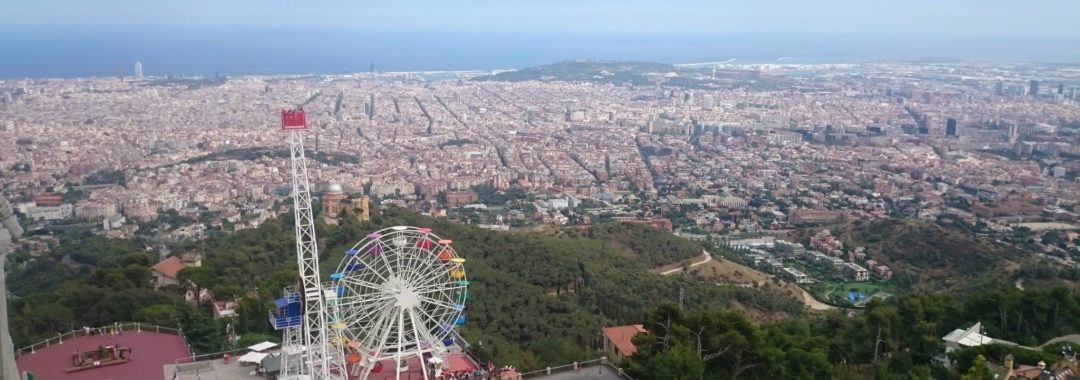
Closer to the funicular station is the Tibidabo Amusement Park. An entrance ticket to the park will set you back €28.50, or €12.50 if you just want access to the panoramic area. This is a very old-school theme park, featuring over 25 rides in a mixture of old-style classics and white-knuckle adventures. The park was opened in 1905, making it a real institution in Barcelona; it has been entertaining families for over 100 years.


The Ferris Wheel offers great views from the mountain, and children can enjoy the Choo-Choo Train or Log Flume rides. There is also a 1928 Avio propeller plane, somewhat of an iconic ride in the park as it soars skyward with its visitors tucked safely inside.

For bigger daredevils, there is the Muntanya Russa coaster that screams through the woods at more than 80kph, 500m above sea level.


FABRA OBSERVATORY


Designed by Joseph Domenech i Estapa, the Fabra Observatory was built in 1901. The observatory carries out research into meteorology, seismology and astronomy, just as it has done for over a century now. Located 413m above sea level and nestled amongst the pines, this is a great building to pay a visit to on your trip to Tibidabo.


Although it is not actually in Tibidabo, it is very close by and definitely worth a visit. Barcelona has one of the clearest skies in the world (300 days of sunshine per year), making it an excellent place for stargazing. You will need to walk a way to get there, but the observatory is open to the public every Sunday from 11am to 2pm, at the price of just €2. The botanical gardens and outdoor gazebo viewpoint are also open on Sundays at this time and are free to explore.

Things to do in Barcelona

Make the Most out of your Barcelona Trip

It is an enchanting Catalonian city, sitting right on the seaside, with incredible sightseeing opportunities for foreign visitors. Art lovers flock to the city to check out the lively art scene, tracing all the way back to Antoni Gaudí’s famed presence here, and living on in the street art and awe-inspiring murals of Barcelona.

For those who have never visited the city before, somewhere with so much to offer can be a little confusing. Luckily, we have compiled this handy guide on things to do in Barcelona so that you know you’re not missing out on all the best of Barcelona.


The beaches

There are several different beaches in Barcelona, but these are some of the best suggestions of what to see in Barcelona. There are Barcelona tours that will take you across the different beaches, ranging from Nova Mar Bella to Sant Miquel beach. The most popular is Barceloneta, but it can get quite busy during the summer months.


Beach Volleyball

There are a number of beaches in and around Barcelona. If you feel like getting active while you’re there, in a way a little more unique than taking a bicycle ride around the city, head down to one of the sandy coves and search for the public volleyball nets. Try asking people already playing if you can join for a match, and that way you might get to meet some of the locals and make friends that last a lifetime.


Picnic

Barcelona today is an extremely popular with tourists, meaning that sometimes you can feel like your trip is a little generic. For a truly unforgettable experience in Barcelona, try arranging to join our international picnic with Picnic!. You can choose the food you want and get it delivered to the picnic spot of your choosing. You get to pick the spot, but the company can point out the best, most unique spots all over the city. If youre coming alone, you can join us with New in Barcelona to the international picnics organized by us! Time it right, and you can watch the sun set over Gaudí Land with friends, family or loved ones.


Barcelona Sightseeing Tours

As with any popular tourist city, sightseeing tours will always be available. Guided tours (in languages including English) are often options at many of the tourist spots, as are audio guides if you prefer to do things on your own time. Looking into these options is an excellent way to get the most out of your visit and make it a fulfilling and educational experience, as well as a really memorable one.


Places to visit in Barcelona

Places to visit in Barcelona

This city has its own identity and Barcelona sightseeing always offers something special. Given that you might feel overwhelmed when you touch down the first time, we have a list of the different Barcelona tourist attractions to give you a clear indication of the worthwhile things to do in Barcelona.


Park Guell

There is no escaping Gaudí when you visit Barcelona, and this garden complex on Carmel Hill is certainly worth the trip. People plan entire Barcelona trips to see the mosaics and serpentine benches that can be found here. The architect’s distinctive style can be found in the sculptures, fountains, and colonnades. If you want to see how Gaudí lived from 1906 to 1926, be sure to enter the House-Museum. You will find decorative items and furniture designed by Gaudí himself.


Bunkers del Carmel

The Bunkers del Carmel offer you a great view of Barcelona city. The actual bunkers themselves date back from the Spanish Civil War and offer you a tremendous panoramic view of the city. Getting there is fairly simple too, take bus 24 that also passes through Passeig de Gràcia and Plaça de Catalunya, take the stop Ctra del Carmel-Gran Vista and walk up Carrer de Mühlberg.


Horta Laberinth

You can find Horta Laberinth on the northern edge of Barcelona. This once royal estate is surrounded by fountains and gardens. The water truly plays a fundamental part of the garden and is represented in canals, ponds, streams, and waterfalls. This is the oldest garden in Barcelona, dating back all the way to 1791. If you want to find one of the more relaxing places to visit in Barcelona, this is highly recommended.


Montjuic

If you have ever wondered about the name of the prominent hill that overlooks the harbor of Barcelona – wonder no more: Montjuic. While it once played a vital role in the defense of Barcelona, it is now one of the best things to do in Barcelona if you want to experience a great view. You can experience truly spectacular views from the harbor at Montjuic Castle. With a relatively low ticket price, this has to be atop your list of things to do in Barcelona.


Tibidabo

You might not want to venture to Barcelona today for an amusement park – but Tibidabo is certainly different. The mountain is home to an amazing amusement park that not only entertains, but also has tremendous views. If you go here, visit the amusement park and the church. There are also picnic tables if you are inclined to bring your own lunch.


 Sagrada Familia

When we talk about the different things to see in Barcelona, Sagrada Familia often stands atop the list. The development started in 1882, and it is still not done. The different construction styles found here are certainly amazing. The work of Gaudí is both inspirational and spiritual. Even though it is still under construction, it is absolutely a must-see location if you head to Barcelona.


Casa Batlló

Continuing with the theme of Gaudí architecture, Casa Batlló is another magical building that overwhelms the senses. Its façade is a mosaic of mauve, green and blue tiles that seem to oscillate in the Catalonian sun, the effect intensified further by the wavy design of the windows and balconies. The building appears like the deep sea even from the inside, making visitors feel like they are riding a calming wave. Another residential building of note is the Casa Vicens, blending Moorish architecture with Oriental details to create another stunning piece.


Mercat de la Boquería

La Rambla is Barcelona’s most famous street, buzzing with a blend of locals and tourists alike. And just off la Rambla is the Mercat de la Boquería, a wonderful local market for you to experience. Yes, the architecture of the market is also stunning, influenced by Barcelona’s modernisme movement, but the market itself is equally as enthralling. If you really want to throw yourself into the delicious Catalonian cuisine, markets like this are a must. This particular one is a high-quality market, offering everything from expensive cuts of butcher’s meat to fresh, juicy fruits. Make sure to propel yourself into gastronomical heaven by trying out Catalonian dishes, such as:

  • Bacallà salat (dry salted cod), which usually comes in an esquiexada (a tomato, onion and black olive salad with frisée lettuce)
  • Calçots (halfway between a leek and an onion), chargrilled and eaten messily
  • Cargols (snails), best eaten as cargols a la llauna
  • Peus de porc (pig’s trotters), which are often stewed with snails.


Camp Nou

Any fans of FC Barcelona should note this down as a necessary visitation whilst in the city. In fact, Camp Nou is a pilgrimage site for football fans of many teams around the world. You can take a self-guided tour around the stadium, beginning in the museum displaying trophies, historical displays and other exhibits, followed by a tour of the stadium itself. Discover how the club’s history relates to the Catalan identity and see the real boots of famed players including Maradona, Ronaldinho and Lionel Messi. This is one of the largest stadiums in the world, with a capacity of nearly 100,000. The tour will take around 2.5 hours overall, but the best way to really experience the stadium is to catch a game yourself (if you’re lucky enough to get tickets amongst the 173,000 fans with memberships).


Museu Picasso

Featured in Lonely Planet’s Top 500 places to visit in the entire world, the museum designated to Picasso’s life works is a marvellous experience. The collection has over 3500 artworks, and apparently it was Picasso himself who proposed the museum’s creation. The collections span over 5 medieval mansions, making this a unique and fascinating experience.